
What Makes A Quality HVAC Installation?
It can be extremely overwhelming to try and choose between different HVAC companies when you’re looking to replace a system. Without insider knowledge of what all goes into an installation, it’s difficult to evaluate on anything but price and the impression you get when you talk to the salesperson or technician. The impression someone leaves on you is a big deal, and not a bad indicator of what your experience with the company will be like. But besides your intrapersonal interactions and the “vibe” you get from your conversation, I would like to offer 4 technical factors that lead to a quality HVAC installation.
An evaluation of your current system
Just because your previous HVAC system blew hot and cold air, doesn’t mean all is right with the world. Of course, you may know this already. If you’ve lived in your house for any length of time you can likely identify the hottest and coldest rooms in the house. A detailed evaluation of your current system will involve DATA NOT RULES OF THUMB. Many contractors size air conditioning equipment by square footage and ductwork by reading the duct sizes on the duct in the attic. This is extremely inaccurate and worthless in almost all cases. The size of an HVAC system should be sized by a load calculation using math, and a duct system can be evaluated in its current state with static pressure readings.
A load calculation is done in computer software, and I charge an additional fee for a detailed load calculation because it takes me several hours of time. I don’t perform a detailed load calculation on every home, but I will if enough red flags (such as high humidity, extreme comfort problems, very bad duct systems) come up.
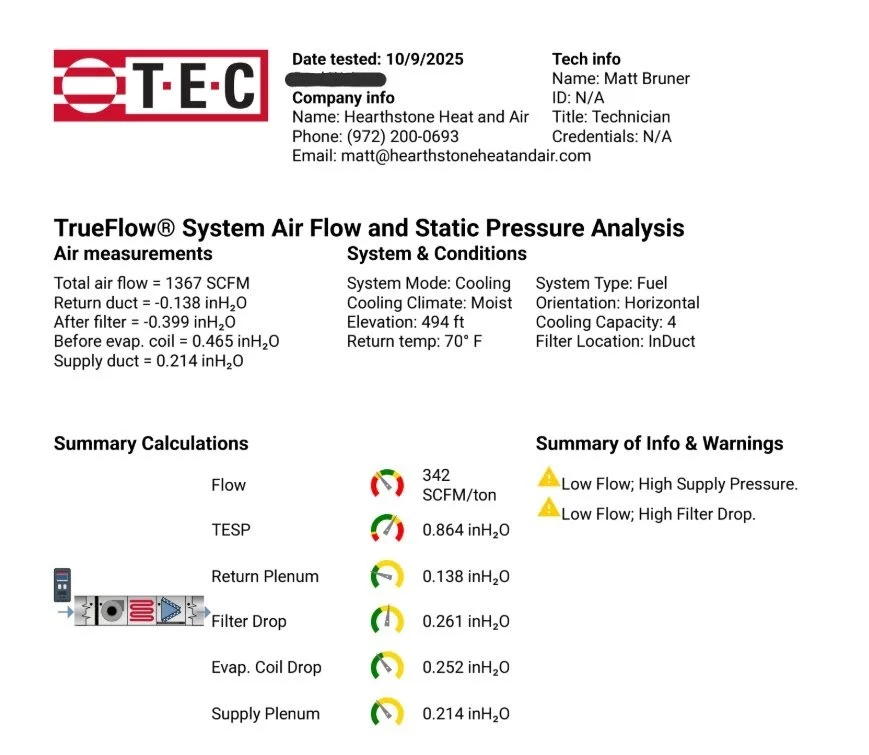
Static pressure testing (and a true flow grid measurement) is provided for free on every sales estimate I provide. Static pressure is simply a duct pressure reading taken while the system is on. A system will have a rated pressure, and you can compare your readings that you take to what the blower/fan in the system is rated for. This gives you a good sense of if the duct system can handle the airflow you are trying to move through it.
Undersized duct systems are incredibly common and are often the cause of comfort and noise problems, and premature fan motor failures. Below is a static pressure and airflow test I completed last year. Once the static pressure and airflow data is collected, informed decisions about how to alter the duct system can be made.
Flowing Nitrogen While Brazing
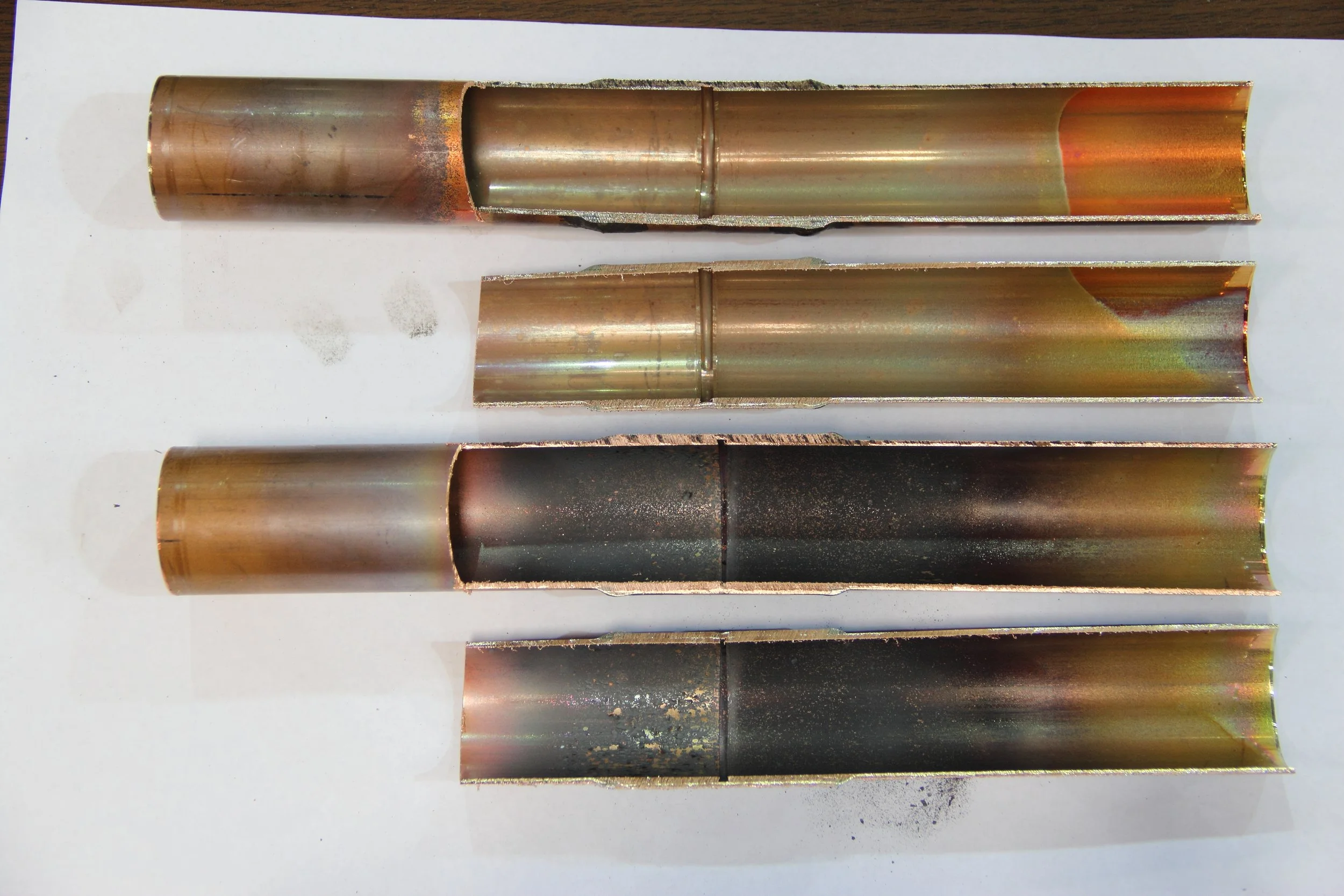
The picture above illustrates one of the most important things we can do when installing a new system, which is to purge the refrigerant lines with nitrogen while brazing. This is not a common practice, although it should be. In all my years of working for other companies it was never mandated or taught to me. I had to learn this process through watching Youtube videos.
If nitrogen is not used to displace the air inside the copper lines while brazing, soot builds up inside the pipe. The fancy name for it is cupric oxide. It doesn’t just look gross. Once refrigerant starts flowing through the pipes, it carries the soot around the system until it begins to clog up parts. This can result in component failures or decreased efficiency. It’s actually an easy process to learn to braze with nitrogen, and costs almost nothing extra.
Pulling A Deep Vacuum
Another process that is not well understood or followed is best vacuum practices. I won’t go too deep into the nitty gritty, but many companies and technicians simply don’t know how to pull a proper vacuum. Pulling a vacuum on an HVAC system means removing the air from the copper lines so that the only thing remaining in the system when it is running is refrigerant. If air is allowed to remain in the lines (even the tiniest amount!) it can mix with the refrigerant oil and break the oil down into acid. This acid begins to eat parts of the compressor and cause premature failures. For a deeper dive, check out this link.
Properly Commissioning on Startup
Once a system is turned in, it isn’t always ready to just get up and running. Refrigerant charge needs to be adjusted based on how far the indoor unit is from the outdoor unit, otherwise efficiency is lost. Airflow needs to be adjusted based on the exact model numbers of the equipment that is paired together, otherwise furnaces can overheat and AC units won’t dehumidify. If we are installing a furnace, we adjust gas pressure to the manufacturer’s settings and perform a combustion analysis. This ensures the system is dialed in as close to perfect as possible and running safely. All of these final steps can add a couple of hours to an install, but are critical in making sure you get what you paid for.
Closing Thoughts
Our goal in installing a new HVAC system is to guarantee that it runs as well as it can for as long as it can. I want to know that I did everything I could to provide you with the best HVAC install possible. There are factors that we cannot control, like part failures, power surges, or product recalls. But I want to do everything I can to make darn sure that your system runs safely and efficiently. I know that buying a new system is a huge investment. We follow these best practices because this is more than just a job to me. Even if we live far apart, I want to treat you like a neighbor. To me the steps above are a big part of what makes a quality, neighborly, HVAC installation.
How Big of an Air Conditioner do I Need?
Wow, that is a loaded question! The answer is, it depends. On what, exactly? A lot of things. It depends on things like
What part of the country you live in. Are you in swampy Louisiana, the desert of Arizona, or temperate San Diego?
How many windows you have, which way they face, how efficient they are, and if you have trees or a roof overhang
How well insulated your house is
The air tightness of your home and duct system
How many people live in the home and how many saltwater fish tanks you have
The video below provides a 3D animation of what all goes into calculating the heating and cooling gains and losses in a residential home. Hopefully it will give you a deeper appreciation for the amount of work required to properly size a heating and cooling system. Do you need a manual J load calculation done on your home? Again, the answer is it depends. If you have comfort problems with your home like high humidity, hot and cold spots, etc. then it may well be worth the investment.
-Matt Bruner
How can I Improve my Indoor Air Quality?

There is near total consensus from experts that improving indoor air quality comes down to three factors: filtration, ventilation, and humidity control. Let's take a look at each one of these factors and some solutions for them that meet any budget:
Filtration
-very fine dust particles can enter our lungs and cause allergic reactions and health problems. A high quality filter (MERV 13 or above) will capture these particles.
-solutions: a standalone air purifier with a MERV 13 filter or better, or upgrade your HVAC system’s filter.

Ventilation
-there are some things in the air like volatile organic compounds (VOCs) that are not good for us, but can't be captured by a filter. The best option to remove these to is to flush fresh air through the house.
-solutions: open your windows on pleasant days, or add a fresh air duct with monitoring and a control strategy to your HVAC system.
Humidity
-maintaining humidity levels between 30-50% keeps dust mites dormant. Dust mites are one of the main causes of indoor allergies.
-solutions: use a portable or professionally installed dehumidifier to manage humidity levels.
There are essentially two paths you can take to improve indoor air quality: the DIY way or the professional installation way. Both options can yield good results. The DIY method is much more hands on and involved, but cheaper. The professional installation method is more expensive, but all of the components are hidden away and automated with controls.
I would also highly recommend testing your indoor air quality before you go investing in solutions. It’s always a good idea to know what we are up against before we start trying to solve the problem at hand. There are many portable/countertop IAQ monitors that are a great place to start. Of if you’re interested in whole home monitoring and testing, we provide those services. Feel free to call or email with any questions you have about Indoor Air Quality.
For a deep dive into the science behind all three of these factors, check out this link
-Matt Bruner